Bitcoin, Blockchain and the Smart Economy
Course 7.5 at Deutsche Schülerakademie (DSA) in Torgelow

In the summer of 2019, I co-led a two-week intensive course on Bitcoin, Blockchain, and the Smart Economy at the Deutsche Schülerakademie in Torgelow. The goal was to equip highly motivated high school students with both hands-on skills and a critical understanding of blockchain technologies, their economic implications, and societal impact.
Interactive and Practical Learning
The course combined:
- Technical workshops based on Mastering Bitcoin.
- Economic and societal perspectives on regulation and finance.
- Hands-on sessions, in which each student managed real Bitcoin transactions and explored exchanges, wallets, and smart contracts.
- Writing a documentation of the course content.
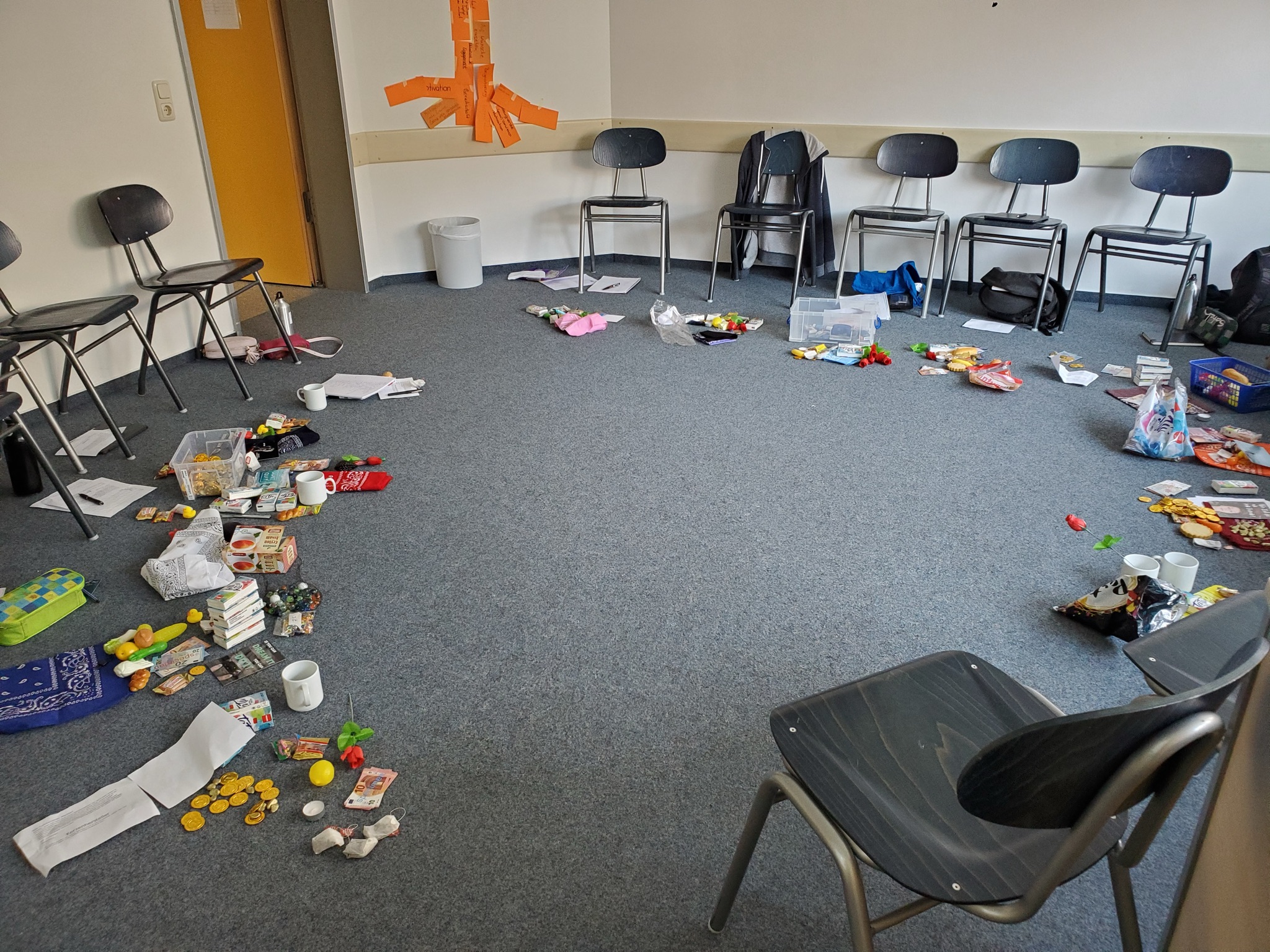
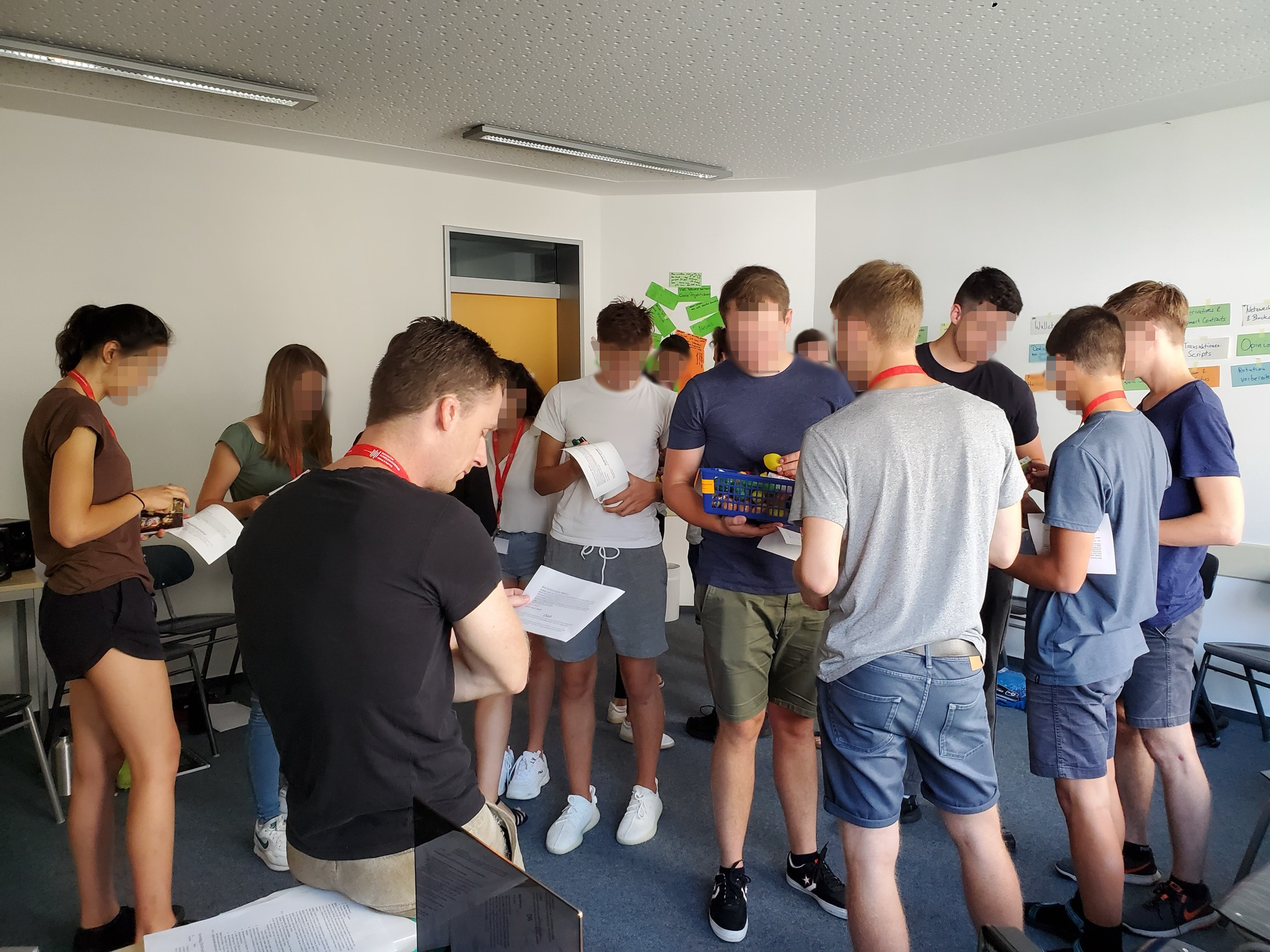
The interactive course design enabled students to develop new skills and ideas independently. We taught basic concepts through group role-plays where students traded resources to achieve their goals. As we encountered problems, we gradually understood the development of “modern” fiat money and then Bitcoin. Throughout the course, we transitioned from traditional teaching methods to acting as mentors, providing an environment that encouraged students to independently acquire new knowledge.
During the theory sessions, the students first familiarized themselves with the provided material and then researched further information on their own to present it to the group.

What did the participants learn?
By the end of the course, participants could:
- Buy, send, and secure cryptocurrencies like Bitcoin using best practices (cold wallets, recovery seeds, 2FA).
- Explain the technical fundamentals of blockchains, including hashing, transactions, and public-private key cryptography.
- Evaluate blockchain applications in finance, politics, and business, distinguishing legitimate innovations from scams.
- Think critically about media narratives and economic interests around blockchain.
- Write scientific reports, using an appropriate style and references.
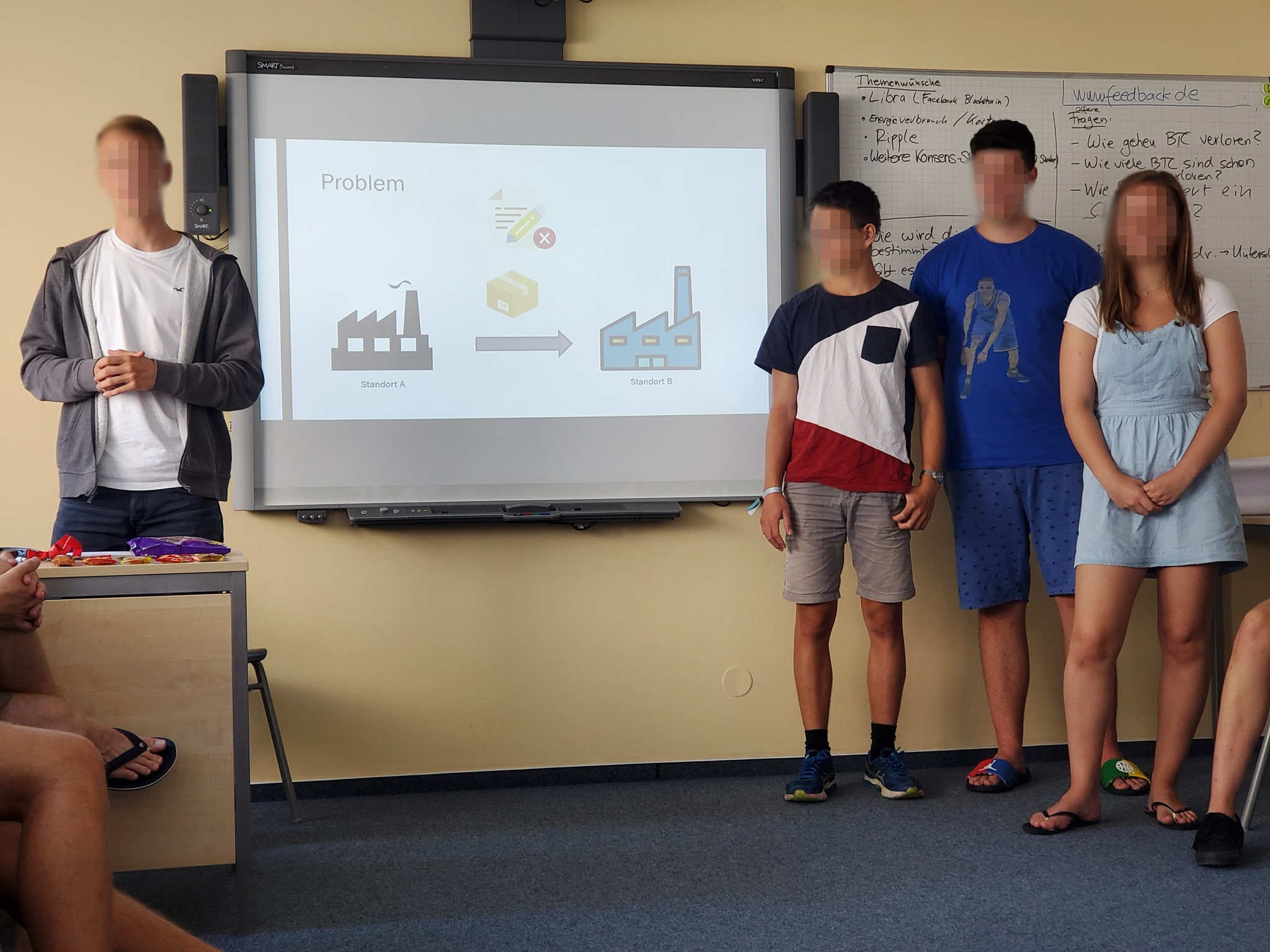
A highlight was the final project, in which teams developed their own blockchain startup ideas and pitched them to a mock investor:
This course was a unique opportunity to combine technology, economics, and critical thinking – and to inspire students to take an active role in shaping the future of digital finance.